

Most people measure the mattress. The smarter move is to measure your room first - then work backwards. Getting this wrong means your new bed arrives and suddenly you can't open the wardrobe door. Here's how to get it right before you order.
UK Standard Bed Sizes at a Glance
UK bed sizes follow standard dimensions, but the frame always adds a few centimetres on each side — so always check the full product dimensions before ordering.
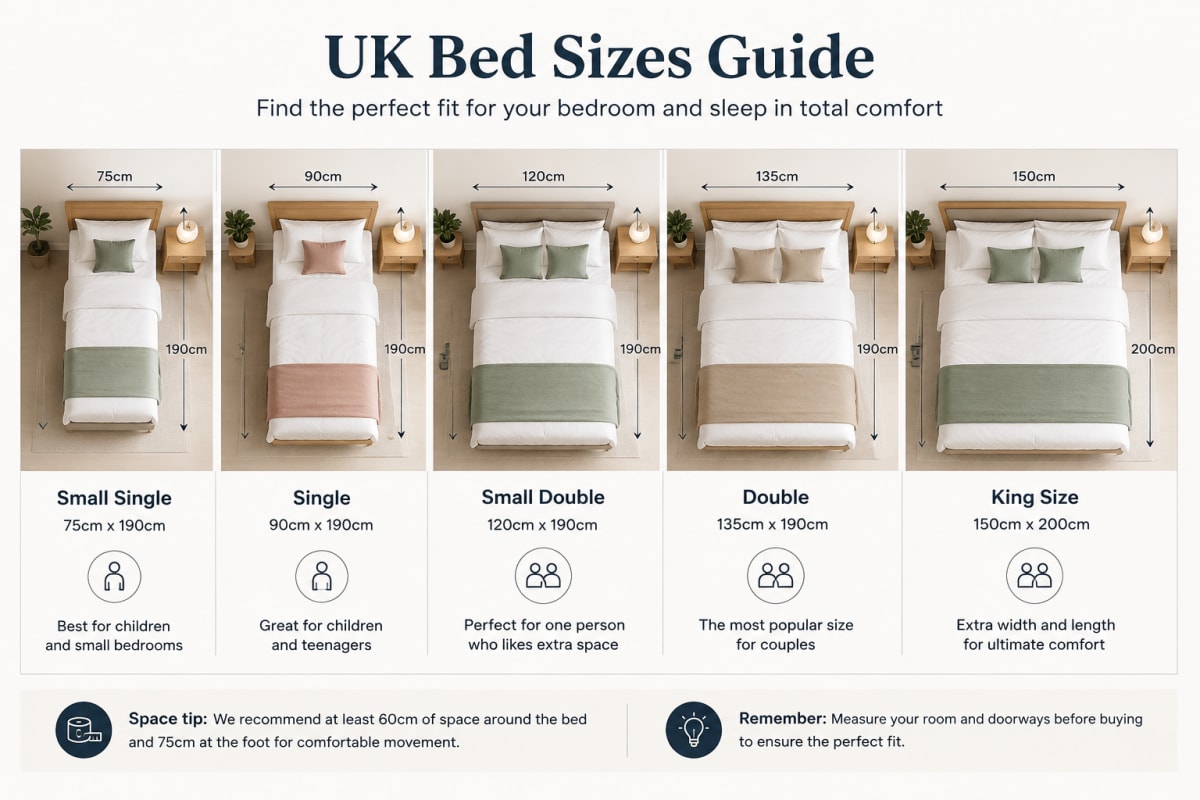
Small Single — 75cm wide × 190cm long — best for young children and box rooms
Single — 90cm wide × 190cm long — ideal for kids, teens, and spare rooms
Small Double — 120cm wide × 190cm long — great for solo adults in smaller rooms
Double — 135cm wide × 190cm long — the most popular choice for couples and solo adults
King — 150cm wide × 200cm long — perfect for couples or taller sleepers
Super King — 180cm wide × 200cm long — maximum space for couples who value their own sleep zone
How Much Floor Space Do You Actually Need?
A solid rule of thumb: leave at least 60cm of clearance on any side you walk past, and 90cm on your main access side. In a typical UK 10×10ft (3×3m) bedroom, a king size leaves you roughly 75cm each side - workable but snug. A double gives you much more breathing room.
Before you order, tape out the bed dimensions on your floor. It sounds obvious but it genuinely changes your decision every time.
Who Is Each Size Best For?
Single beds work well for children or spare rooms where guests visit occasionally. A small double is surprisingly roomy for one person and fits well in a room that can't quite take a standard double.
The double remains the most popular bed size in the UK - it suits couples in average-sized rooms without dominating the space. King size is worth the upgrade if you or your partner is over 6ft, or if you both value your own sleep space. Super king is a luxury choice - brilliant if your room can handle it, but be honest about whether it leaves you enough space to actually live in the room.
Don't Forget the Frame and Headboard
The bed frame typically adds 5–10cm to the width and length shown on the mattress spec. An upholstered headboard adds another 10–15cm in height - worth thinking about if you have a low ceiling or a radiator directly behind the bed.
If you're considering an ottoman bed, you also need clearance above the mattress for the gas-lift base to open fully. Make sure there's nothing hanging above - like a sloped ceiling or a pendant light - that would block the lift.
Still Not Sure? A Quick Decision Guide
Ask yourself three questions:
What are my room dimensions? Tape it out before anything else.
Who's sleeping in it? One person or two, and how tall?
Do I need storage? Ottoman and divan bases add underbed space without taking up floor room.
If you're tight on space but need storage, a divan bed with drawers or an ottoman bed are both worth a look - you get the storage without sacrificing floor clearance the way a wardrobe would.
The right bed size is the one that fits your room and your life - not just the biggest one you can squeeze in.