

A headboard does more than fill the gap above your mattress, it changes how the whole room reads. Get the size or fixing wrong, though, and it's one of the more annoying things to send back. Here's how to choose properly the first time.
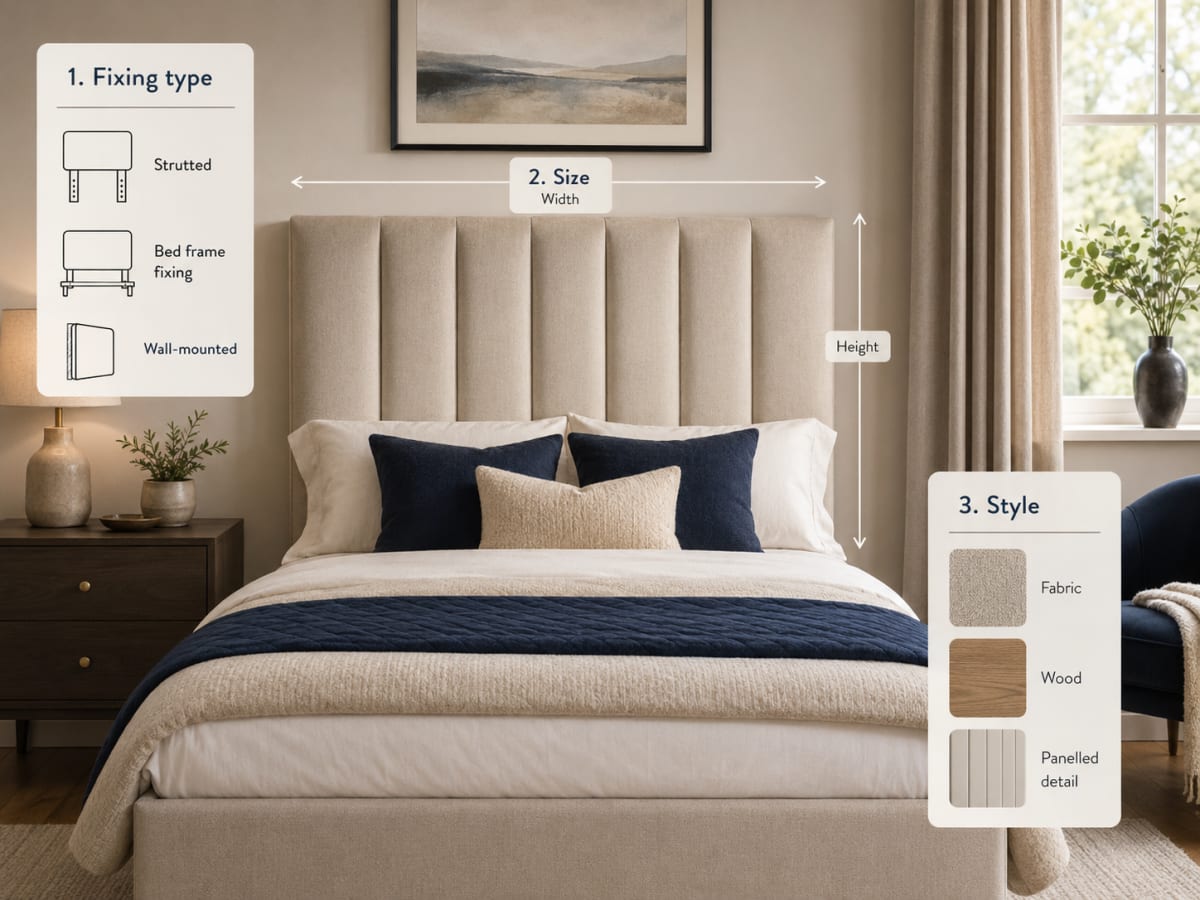
Which fixing type is right for you?
Headboards attach in one of three ways. Which one works for you depends on your bed base, not just your taste.
Strutted (floor-standing)
Best for: divan and ottoman beds. Stands independently on its own legs behind the bed, no fixing to the base needed.
Bed frame fixing
Best for: bed frames with pre-drilled headboard brackets. Bolts directly to the frame - needs matching bracket spacing.
Wall-mounted
Best for: any base, when you want the headboard fixed at a set height regardless of mattress depth. Needs a stud or suitable wall fixing.
Not sure which yours takes? Divan and ottoman beds almost always use strutted headboards. If you already have a bed frame, check for bracket holes on the frame's headboard end before ordering.
Getting the size right
Headboard width must match your mattress size, not the room - a double headboard on a double bed, a king headboard on a king bed. Going up or down a size is the single most common return reason.
Width - always matched to mattress size (single, double, king, super king), not guessed by eye.
Height - typically ranges from around 90cm (low profile) to 130cm+ (tall, statement headboards). Lower ceilings or beds under a window suit a shorter headboard; taller headboards work best with more wall space above.
Depth - mainly relevant for wall-mounted headboards, where you're deciding how far it projects from the wall versus how far the mattress sits from the wall.
Choosing a style
Fabric - soft, warmer feel, good for absorbing sound in the bedroom. Wipeable performance fabrics are easier to keep clean than standard weaves.
Wood or wood-effect - durable, easier to clean, suits a more structured or Scandinavian look.
Buttoned / panelled detail - adds a more traditional, tailored look without changing the size or fixing.
Style is really a finishing decision - sort the fixing and size first, then choose the look that fits the room.
Planning your headboard
Check your base type first
Strutted headboards need a divan or ottoman base to lean against. If you're buying bed and headboard together, this isn't an issue - it only matters when adding a headboard to an existing bed.
Measure before you commit to height
A tall headboard behind a low window or sloped ceiling can look oversized in photos but wrong in the room. Measure the wall space above the mattress line before choosing height.
Match, don't guess, the width
Always order to your mattress size, not the outer frame or room measurement. A too-narrow headboard looks like a mistake; a too-wide one overhangs awkwardly.
Frequently asked questions
Does a headboard have to match my bed base?
The width needs to match your mattress size. The fixing type needs to match your base - strutted for divan/ottoman, bracket-fixed for most frames.
Can I add a headboard to a bed I already own?
Yes, as long as you match the fixing type to your existing base and the width to your mattress size.
What if I want a taller headboard than standard?
Wall-mounted is usually the better route for taller or statement headboards, since it isn't limited by the base's strut height.
Are your headboards made to order?
Yes - every MnM headboard is handcrafted to order in Britain, sized to your mattress, with free UK delivery as standard.
Ready to choose your headboard?
Browse the headboard range sized to match your bed, or see the full bed collection if you're starting from scratch.